How a waiter takes an order — table se kitchen tak.
Tap the table, tap the dishes, tap Fire. On the restaurant Wi-Fi the round reaches the register in one hop — the KOT prints in the kitchen, or lands on the kitchen screen — and the items lock onto that table's bill. The next round carries only the new items, so nothing gets cooked twice.
Waiter's own phone · Android + iPhone · no paper pad, no re-keying at the counter
One round, start to kitchen.
Pick the table
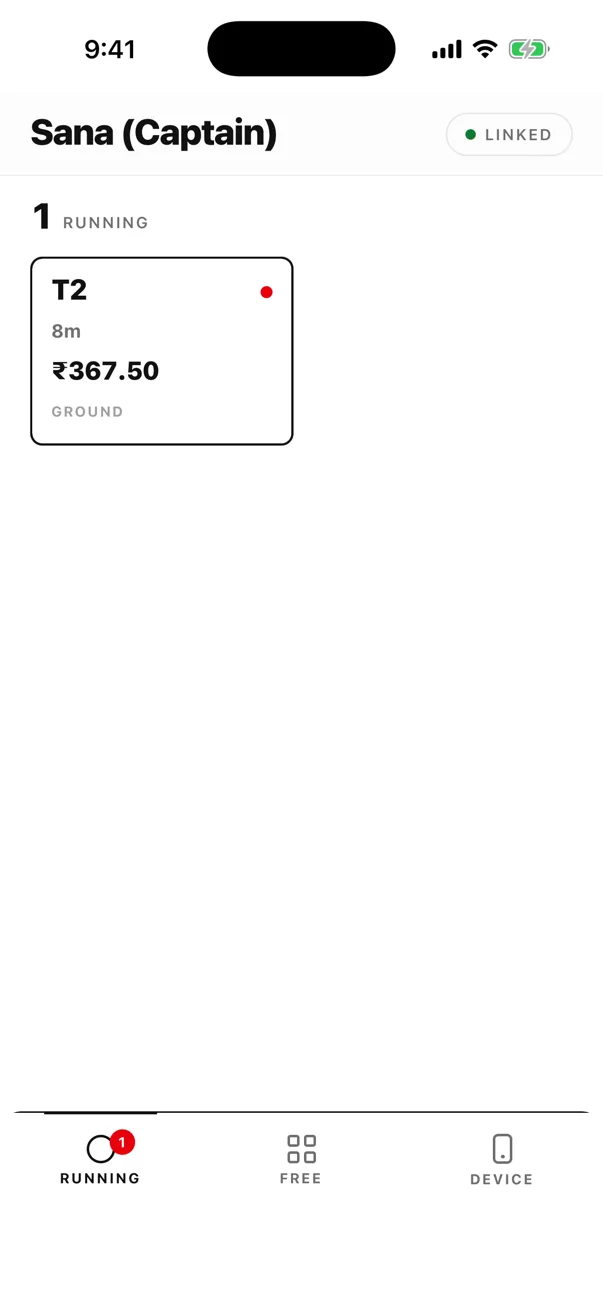
Running lists the tables that already have a tab, oldest first, each with its elapsed timer and its amount. Free lists only the tables nobody is sitting at, plus a + Takeaway button for a parcel. An occupied table is not in the Free list at all, so you cannot accidentally open a second tab on it — to add to a table someone is already on, open it from Running.
- The summary row across the top reads Running · To send · Over 45m — the third number is the one that decides where you walk next.
- Seating timers warn at 45 minutes and go late at 75, with a colour and an edge bar, so the state reads even under bad light or with colour-blind eyes.
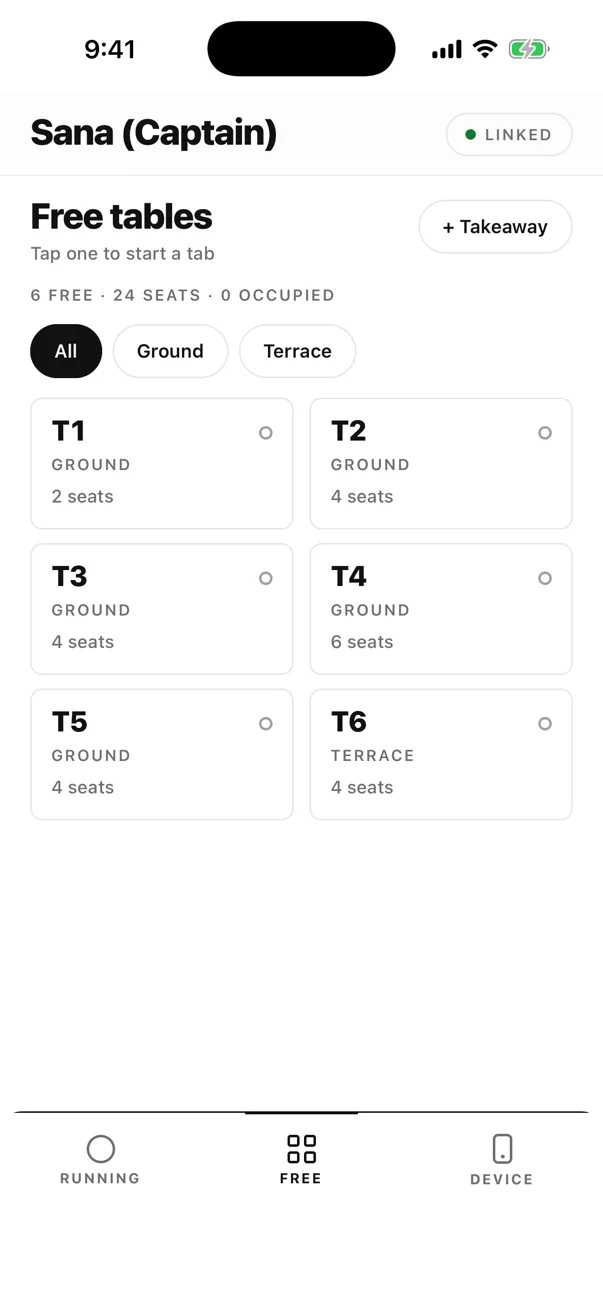
Free tables only — tap one to start a tab.
Add the items
Search by name or tap a category chip. Veg is a green circle, non-veg a brown triangle. A dish that comes in two portions shows Half and Full as two one-tap keys, and add-ons come with their own min and max rules, so you cannot send a combination the kitchen cannot cook. Tap the same dish again and the quantity bumps on the line you have not fired yet — you do not get two rows for two rotis.
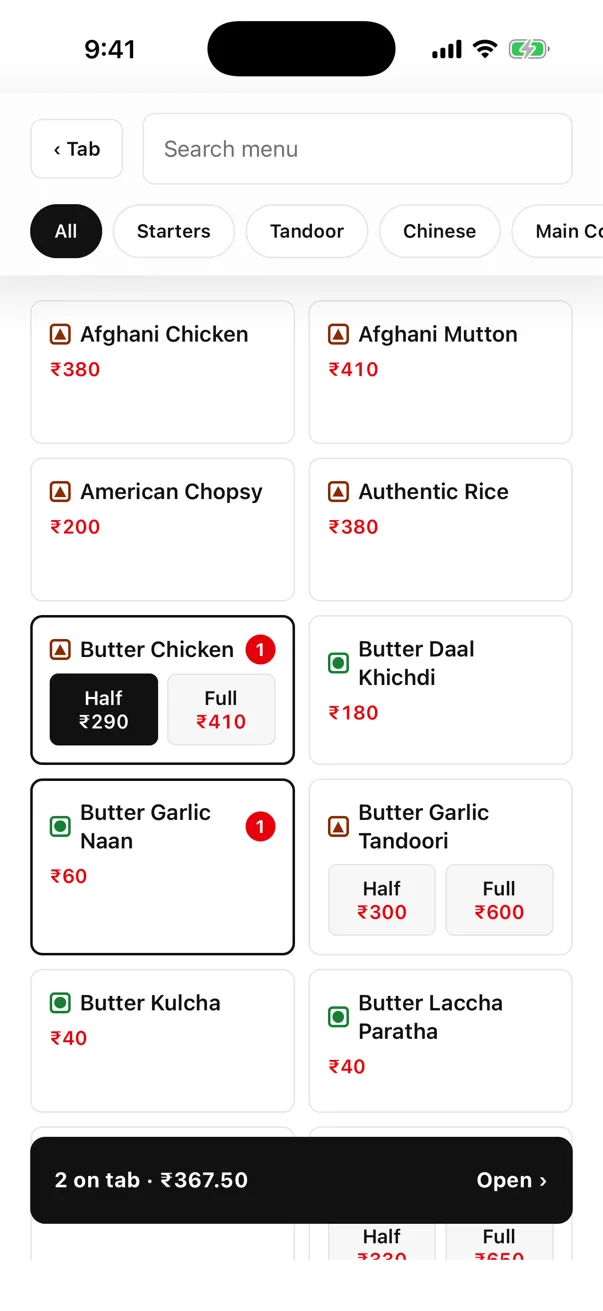
Half and Full as two one-tap keys — no portion picker, no second screen.
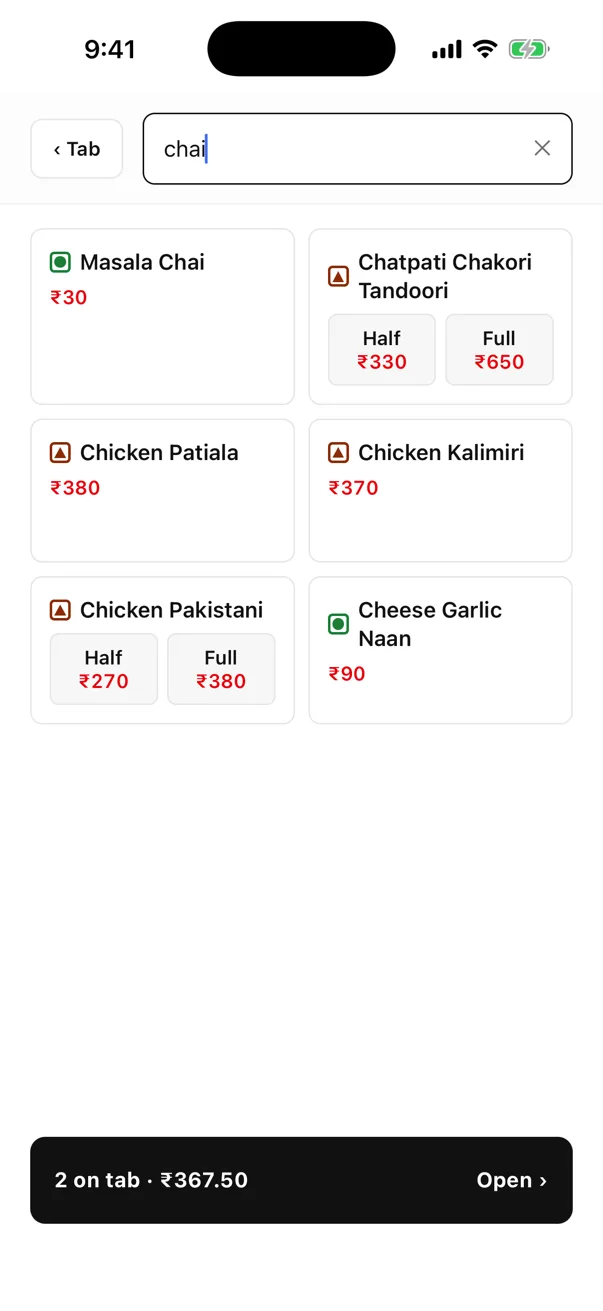
Search by name when the category chips are slower than typing.
Add the note the kitchen actually reads
Any line you have not fired yet takes a cooking note — "no onions", "less spicy", "make it mild". It rides with that line and prints in bold on the KOT, so the note reaches the person at the range and not just the person at the table.
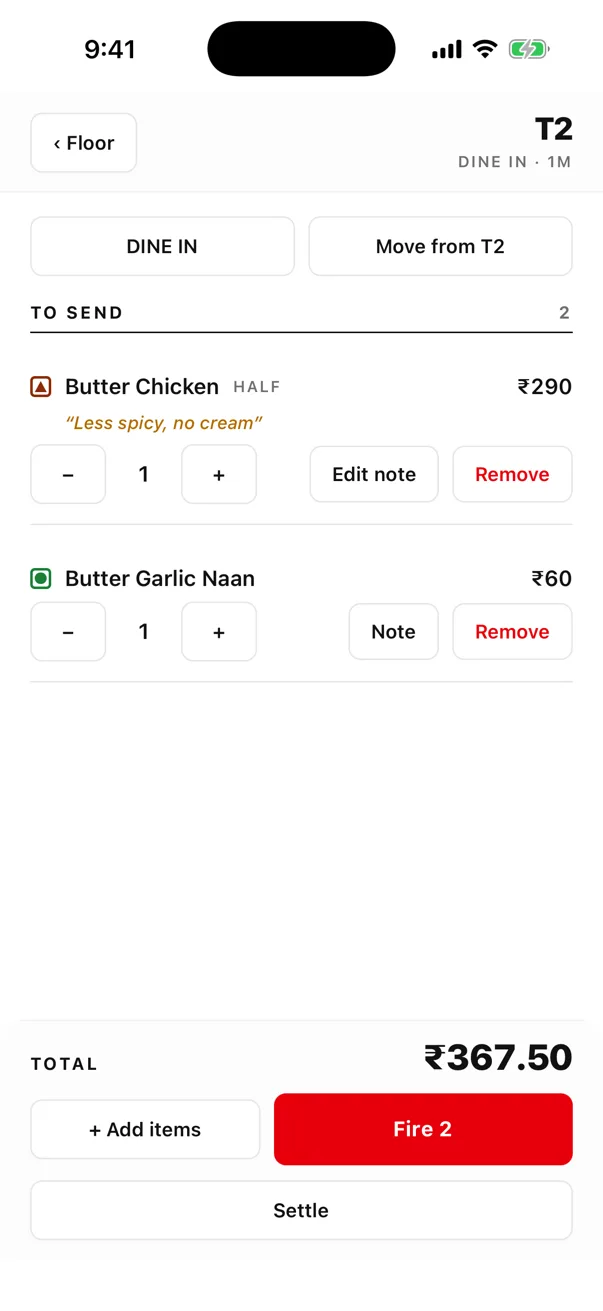
"Less spicy, no cream" riding the line — this prints in bold on the KOT.
Press Fire
The order screen splits into To send and Sent to kitchen, and the button reads Fire 3 — the count is exactly what is about to go. On the restaurant Wi-Fi that is one hop to the till and the KOT prints, or lands on the kitchen display, about a second later. Off the Wi-Fi with mobile data it takes a few seconds via the server. With neither, the round is held on the phone, keeps retrying, and stays badged until the register confirms it.
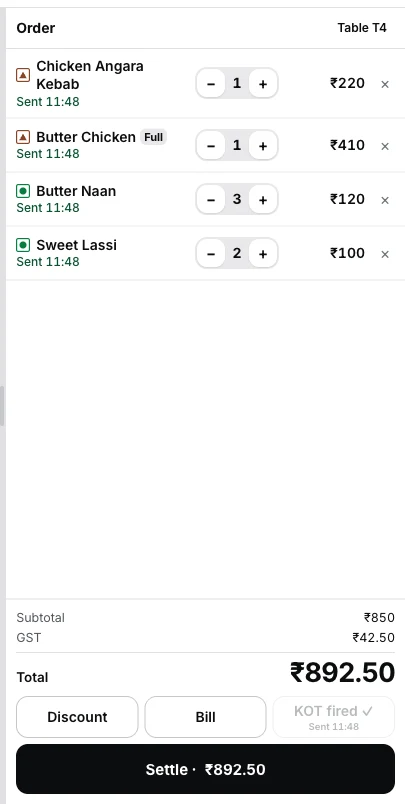
The counter's view of a fired round — the same lines, already on the bill.
Want to watch a fired round land at the counter? Open the live demo on a laptop and ring a round yourself — it is the real register in the browser, so it needs a laptop-size screen. On a phone right now? the Android phone register is the nearer door.
Running tables, oldest first.
- Every open tab, with its clock. Elapsed time and running amount on each row — who is waiting, who is about to ask for the bill.
- To send is a to-do list. If a table shows items in To send, somebody typed them and nobody fired them. That is the number to clear before you walk away.
- Free means free. Occupied tables are hidden from the Free tab, so two waiters cannot open two tabs on table 4 in the same minute.
- + Takeaway for a parcel — same menu, same fire, no table.
Fire again — only the new items print.
The guest orders two more rotis at 9:10. You add them, press Fire again, and the kitchen gets a ticket with those two rotis on it — headed Round 2+ with the previous count, so the person at the range knows this is a follow-on and not a re-print of the first ticket. Nothing from round one appears again, and nothing gets cooked twice.
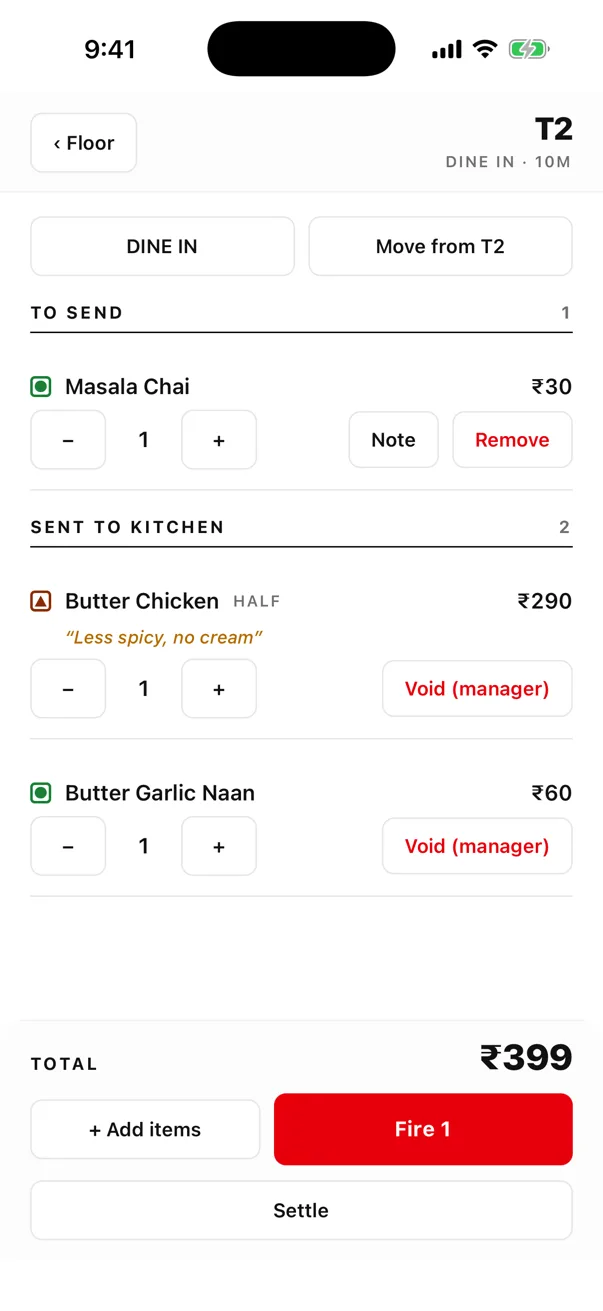
To send sits above Sent to kitchen — the fired lines from round one stay put, with Void (manager) the only way to touch them.
Why the app is strict about this. A KOT is a promise to cook something. Once a ticket names a dish, that dish exists — so the app will never quietly change what a ticket said. New items get a new ticket; that is the whole rule.
Three waters came, one went back.
- Down is free. A fired line's quantity can go down with nobody's permission. The table is billed for two waters, and no manager has to walk over during a rush to approve a correction that costs the restaurant nothing.
- Up is not a correction. Pressing + on a fired line opens a new line that rides the next fire, because the kitchen only cooks what a KOT actually named. Raising a fired line silently would mean billing for a plate nobody was told to cook.
- Zero is a write-off. Taking the last unit off a fired line means a cooked dish is being cancelled, so it escalates: manager PIN, and a reason on the record.
A check stays correctable right up until it settles. That is deliberate — most POS systems make a waiter fetch a manager for a returned water, and that is how a queue starts.
Cancelling a cooked dish needs a manager and a reason.
- The void asks for a manager PIN and a reason. The approver is checked against your staff roster and stamped on the record, so the day-end names a person, not a device.
- The cancelled line stays visible, struck through. It does not disappear from the check. Somebody cooked that plate; the record should say so.
- Discounts are a rupee amount, not a percentage — and a captain's discount needs a manager PIN too. Waiters take orders; managers move money.
- A captain cannot refund, edit the menu, mark an item out of stock, or open reports. Those live at the counter and in the owner dashboard.
Hand it to the counter — or settle at the table.
- Usually: leave it running. The register already has every round. The cashier prints the GST bill and settles it like any other check — rounds from phones and rounds punched at the counter are one bill.
- At the table: Cash and UPI marking only. The sheet says it itself — "Marking only — no drawer opens and no card is read here." You are recording how the guest paid, not taking a card payment.
- No drawer, no card, no refund from the phone. If a guest wants a card machine or a refund, that is the counter's job.
- The printed bill. Where the bill prints from depends on how the store is set up — the counter register, or an Android phone acting as the store's printer. See printing the first GST bill.
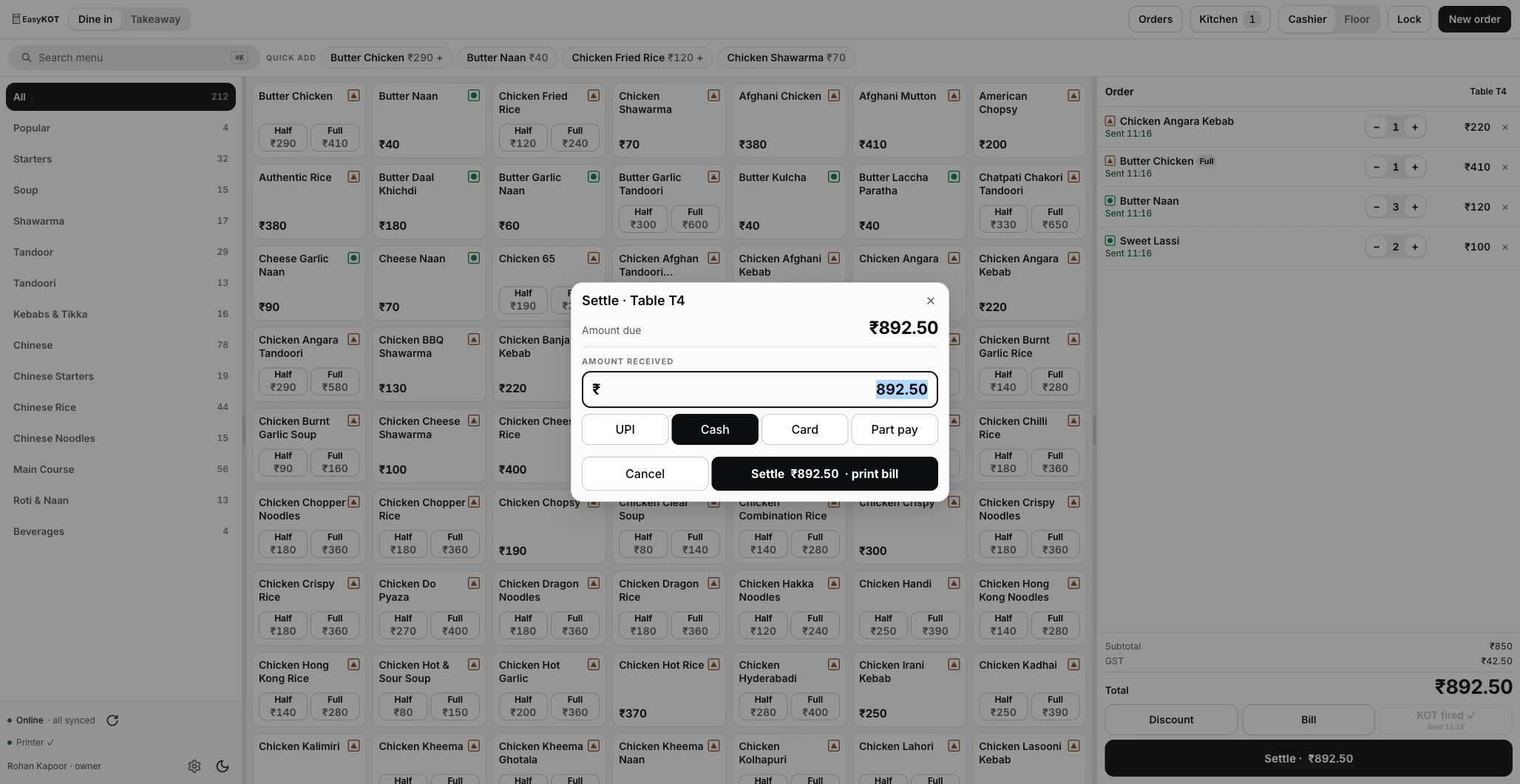
The counter's settle screen on the desktop register — the phone's version marks cash or UPI and stops there.
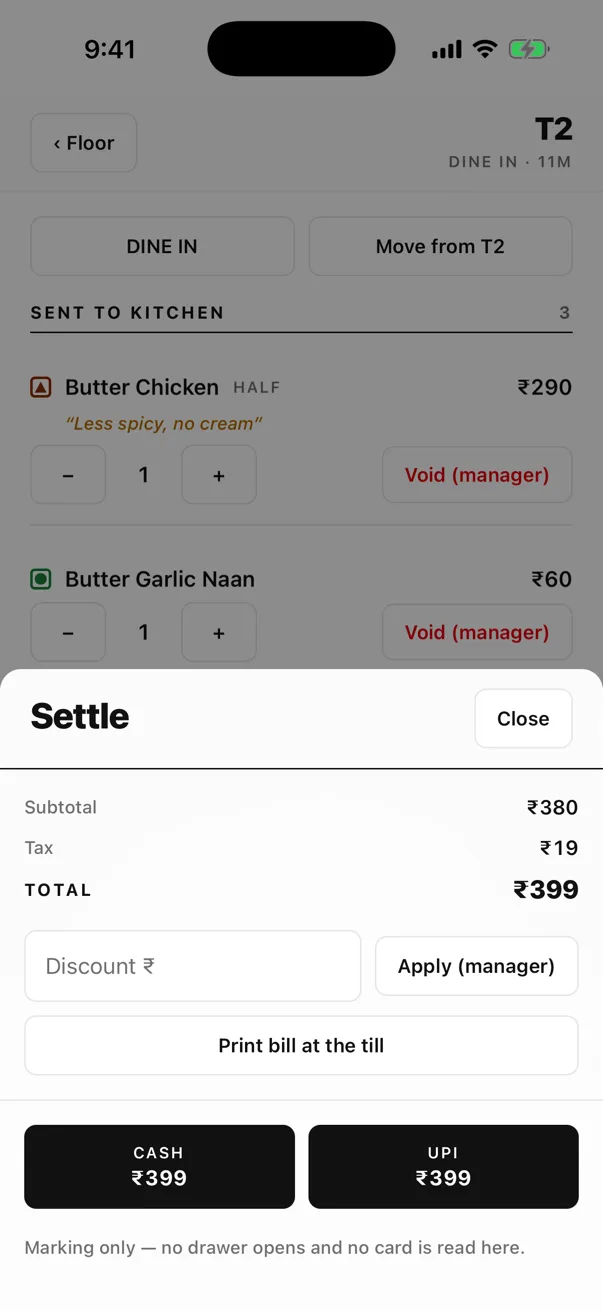
The phone's own settle sheet — the footer says exactly what it does and does not do.
Veg, non-veg, and the dish the kitchen has run out of.
- Green circle, brown triangle. The marks are on the tile itself, so nobody has to remember which paneer dish is which at 9pm.
- Half and Full are two keys, not a menu. A two-portion dish shows both prices as separate one-tap keys — no picker, no second screen, no wrong portion on the bill.
- An 86'd dish stays on screen, greyed and struck through, labelled Out of stock — and cannot be added. Seeing it and being unable to tap it is the point: the waiter knows the kitchen is out, instead of wondering where the dish went.
- The phone cannot 86 an item. Marking a dish out of stock happens on the register or in the owner dashboard, and every phone sees it at once.
The marks live on the tile itself.
Straight answers.
Can I add items after the KOT is fired?
Can I reduce a quantity after firing?
What if the guest cancels a dish that is already cooking?
Does the kitchen see the special instructions?
Can two waiters work on the same table?
Waiter bill bhi bana sakta hai?
Does the order survive if the phone loses Wi-Fi mid-order?
Send this page to your waiters.
This is the page to paste in the staff group. It is short, it is phone-shaped, and it names the four taps in the order they happen — which is roughly the whole training.
Before any of this: the setup
The owner's job, done once — the setup code from Devices, the register's 5-minute pairing code, and a PIN per waiter.
Set the phone up first →Where the KOT lands
Tickets on a kitchen screen with timers and bump — an old monitor or tablet on your own Wi-Fi, instead of paper.
See the kitchen display →Settle and print the GST bill
The table is done: take the payment, print the tax invoice with the CGST and SGST split, and close the check.
Print the first GST bill →Deciding whether to put phones on the floor at all? That case is on the captain app page. Portions and add-ons come from your menu.
3 mahine chalao, phir paisa lagao.
Three months free, full product, no card. Made in India, for the counter — built inside a running restaurant.